The Theory of Color for Kids
Color, color, color!
Do your kids LOVE to mix colors? It is one of the most fascinating things in art -
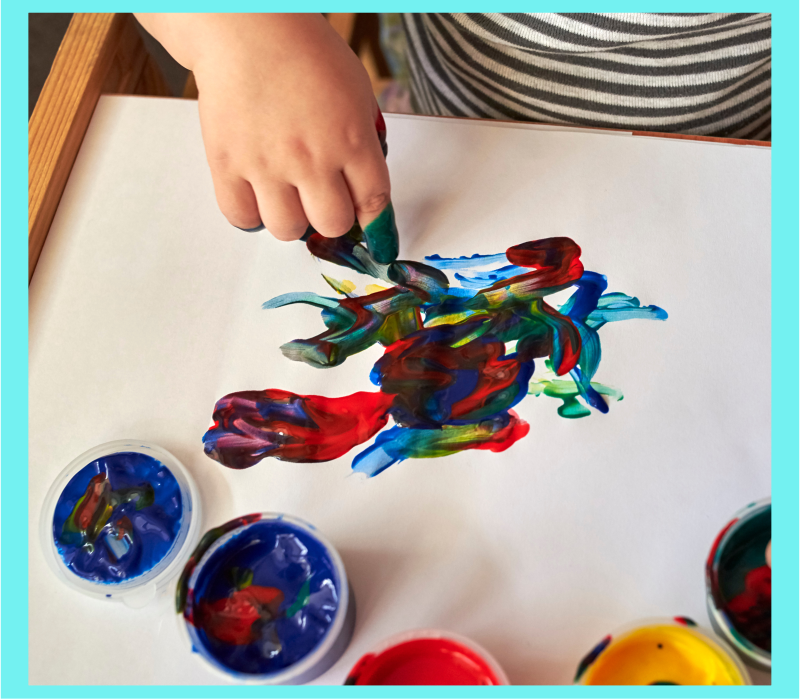
taking 2 or more colors and creating .....
WHAT? Mudsville? Oh no!
Red + Yellow = Orange
Yellow + Blue = Green
Blue + Red = Violet
BUT
Red+Yellow+Blue = BROWN - Mudsville!
I've seen it hundreds of times ... totally by accident.... happy paintbrushes dancing around and suddenly - OOPS!
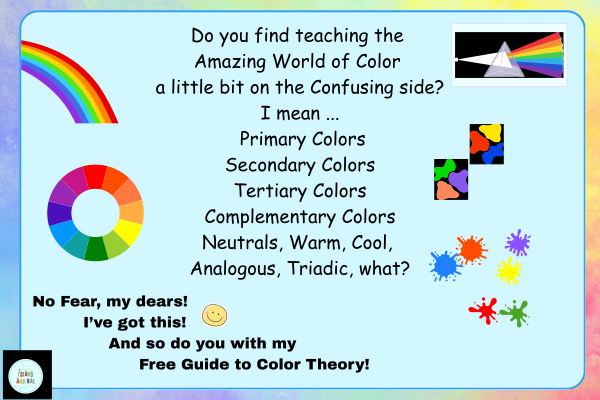
That's why I created my Island Art Gal's Guide to Color Theory!
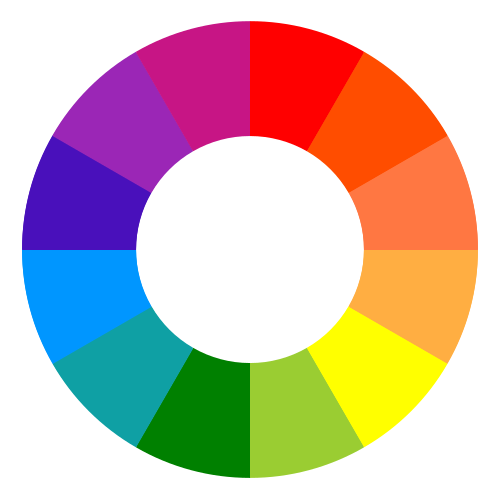
Be introduced ... or re-introduced to the Color Wheel and the main color families - Primary, Secondary and Tertiary Colors.
Neutrals, Warm/Cool, Complementary, Analogous and Triadic Colors are included along with practice sheets for coloring your own Color Wheel and Color Families!
Throw in the light spectrum = rainbow = science integration! Oh yeah, it's all good!
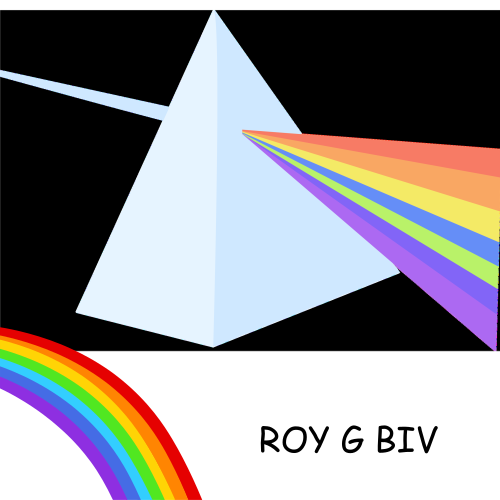
Island Art Gal's Guide to Color Theory is available for FREE here!
Speaking of Color - let's check out Master Artists and their use of color!
First up - Piet Mondrian
Piet Mondrian, 1943
Broadway Boogie Woogie Dutch artist who moved to NYC
and became known for his use of Primary Colors (red, blue, yellow)
in Abstract, Geometric Art.

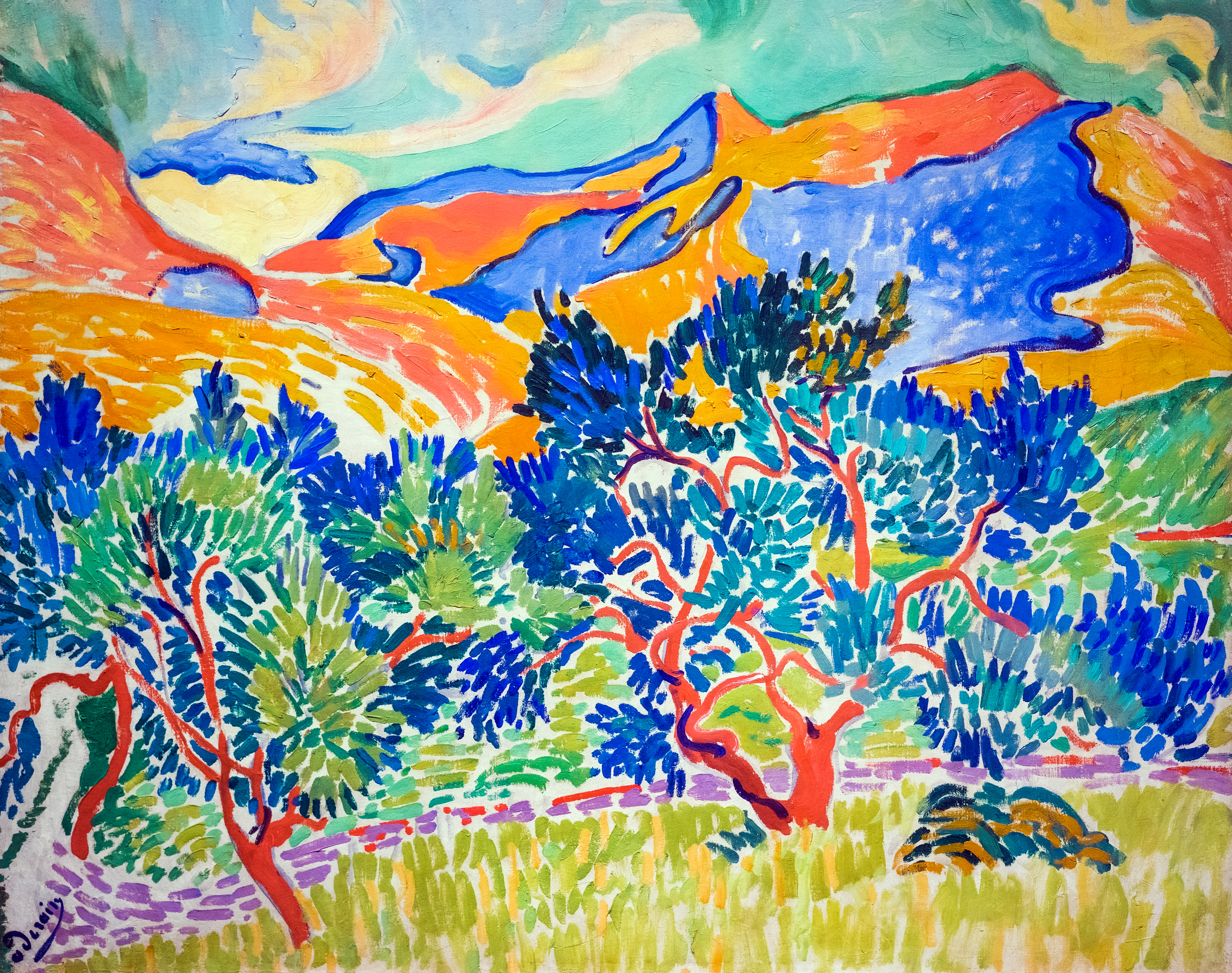
André Derain
View of Collioure 1905
French artist, co-founder of the "Fauvism" movement.
Intense, vibrant, non realistic colors. Check out the use of "Complementary Colors" - orange/blue, yellow/violet and reds/greens.
The infamous Claude Monet
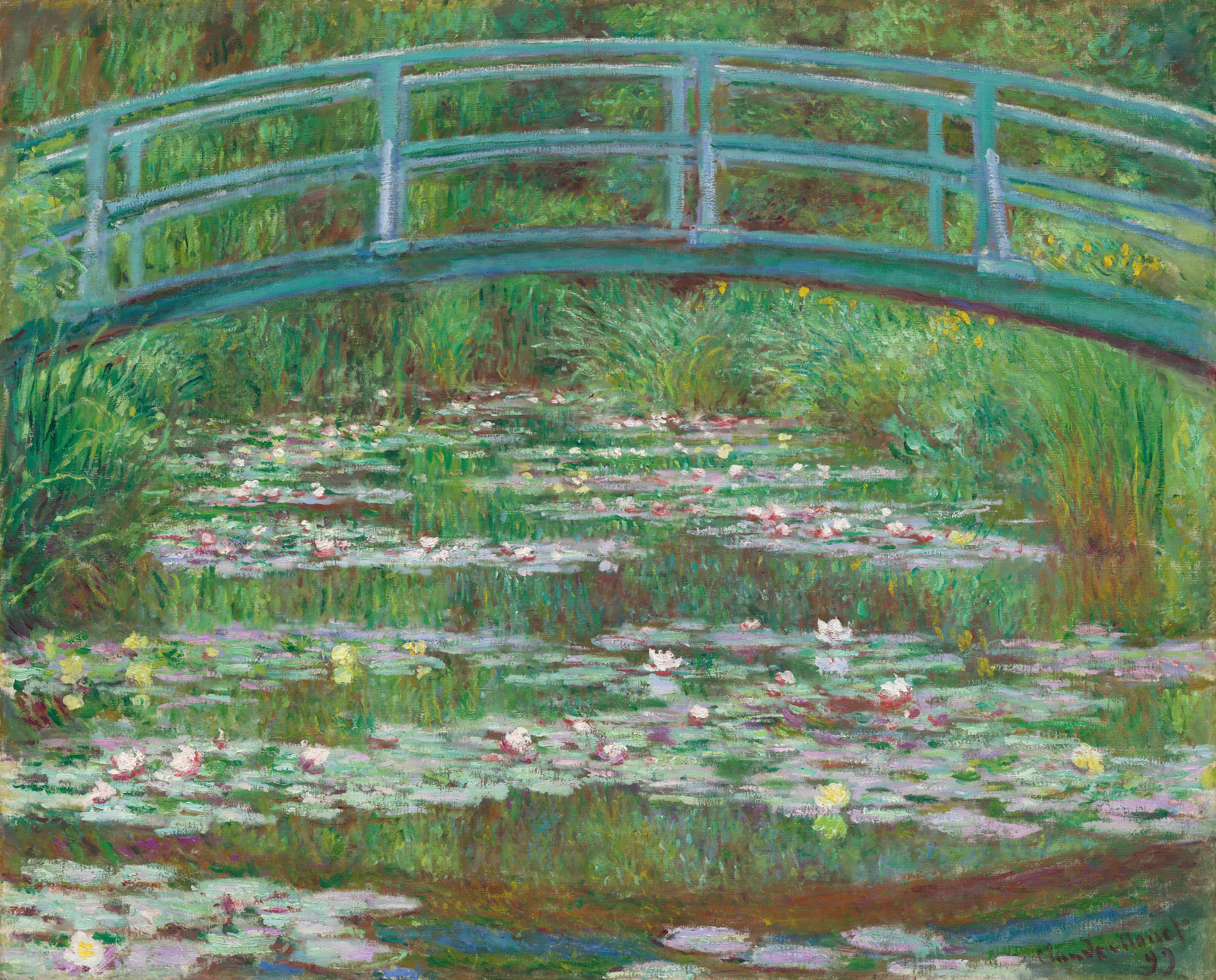
Claude Monet, 1899
The Japanese Footbridge
French artist, founder of the "Impressionist" movement is known for his waterlily paintings. Monet would paint outdoors to capture light and use natural, vibrant colors.
Check out the use of "cool" colors (greens, blues, violets).
Georgia O'Keeffe
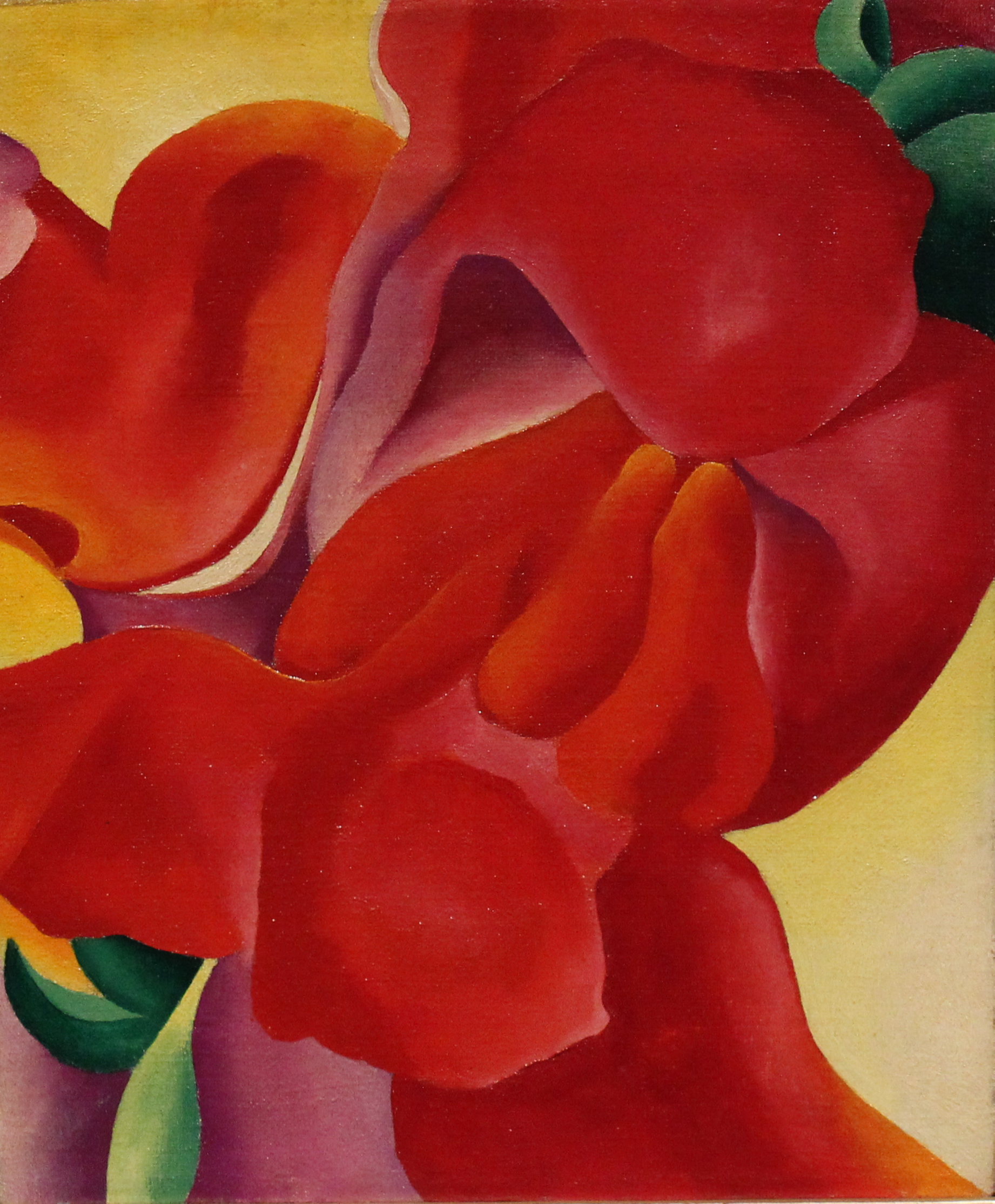
Red Canna 1923
Pioneering American Artist known for her large, upclose
paintings of flowers, sun bleached animal skulls, NY skyscrapers and New Mexico landscapes.
Check out her use of "warm" colors in Red Canna (reds, yellows, oranges).
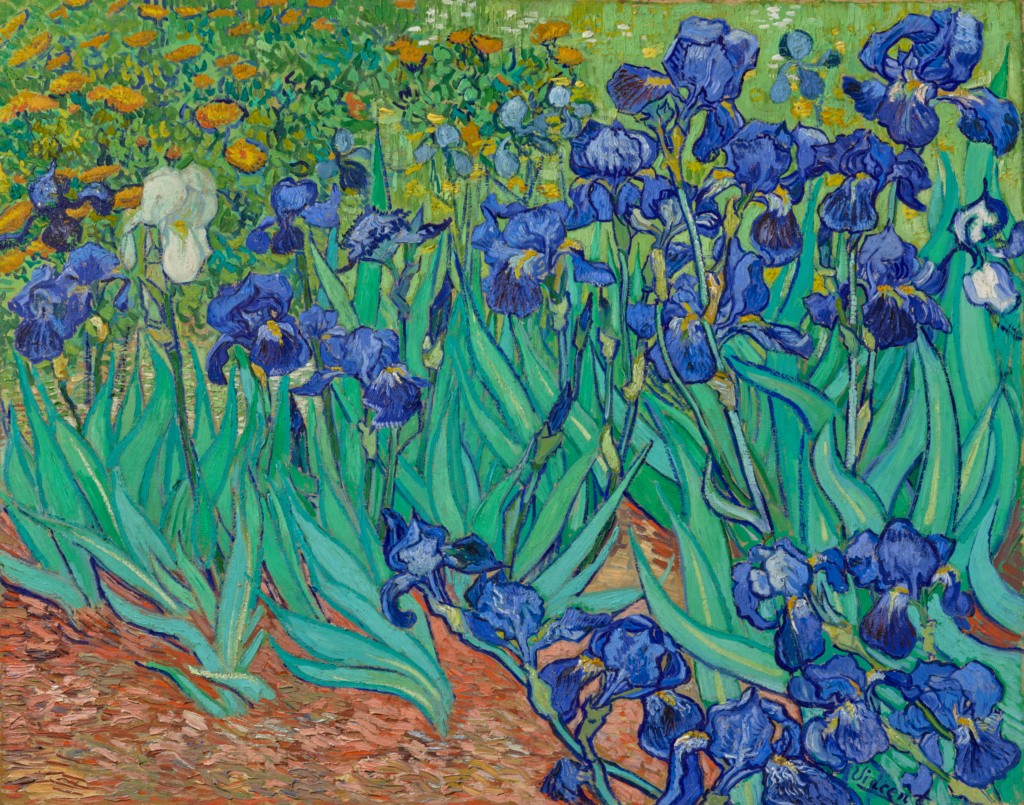
and last but not least, the master of color himself - Vincent van Gogh!
Vincent van Gogh
Irises at Saint-Rémy 1899
Dutch painter, one of the greatest Post Impressionist painters. Known for vibrant, intense colors, emotional impact and textured brushstrokes.
Check out van Gogh's use of "Secondary" colors (orange, green, violet).
🔍OBSERVE:
Strengthen your child's power of observation.
Complete the Color Theory Activities in the downloadable PDF handout!
Go Outside: Can you find all the colors of the Color Wheel/rainbow in nature?
Can you eat the Colors of the Color Wheel/rainbow? Skittles don't count!
Home: What colors do you find in your home? Can you find any of the Color "Families" such as Primary Colors, Monochromatic, Complementary, Neutral? Are there any dominant colors (color you see the most) in your furnishings or clothing?
****************
🖌️CREATE:
Create a Color Wheel using objects found in your home! Arrange them in a circle and ROY G BIV order (red, orange, yellow, green, blue, indigo/optional - and violet).
Be inspired by Piet Mondrian and create a work of art using the Primary Colors (red, yellow, blue). 🔴🟡🔵
Create a work of art using the Primary and Secondary Colors (red, orange, yellow, green, blue, violet). 🔴🟡🔵🟠🟢🟣
Create a work of art emphasizing one pair of complementary colors (red/green, yellow/violet, blue/orange). 🔵🟠 🔴🟢 🟡🟣
If you have paint, have fun mixing some colors.
Here's a tip from one artist to another: it takes just a "smidge" of a darker color to change the color and a "lot" of a lighter color to change the color. So, add the paint carefully!
🖌️If you are mixing green: dip your paintbrush in blue paint and start a new "dab/blob" of paint. 🔵
Then dip a clean paintbrush into the yellow 🟡 and add it to the "blue dab" of paint. You will now have some sort of green paint. 🟢 Determine if you need more blue or yellow.
The beauty of this type of mixing is keeping your original blue and yellow paint "clean." I know adults know this but most children need to be taught this way of mixing paint. Some kids need a lot more practice than others (ask me how I know!)
Thanks for the read!
I'd love for you to Explore, Connect and Create with me!


